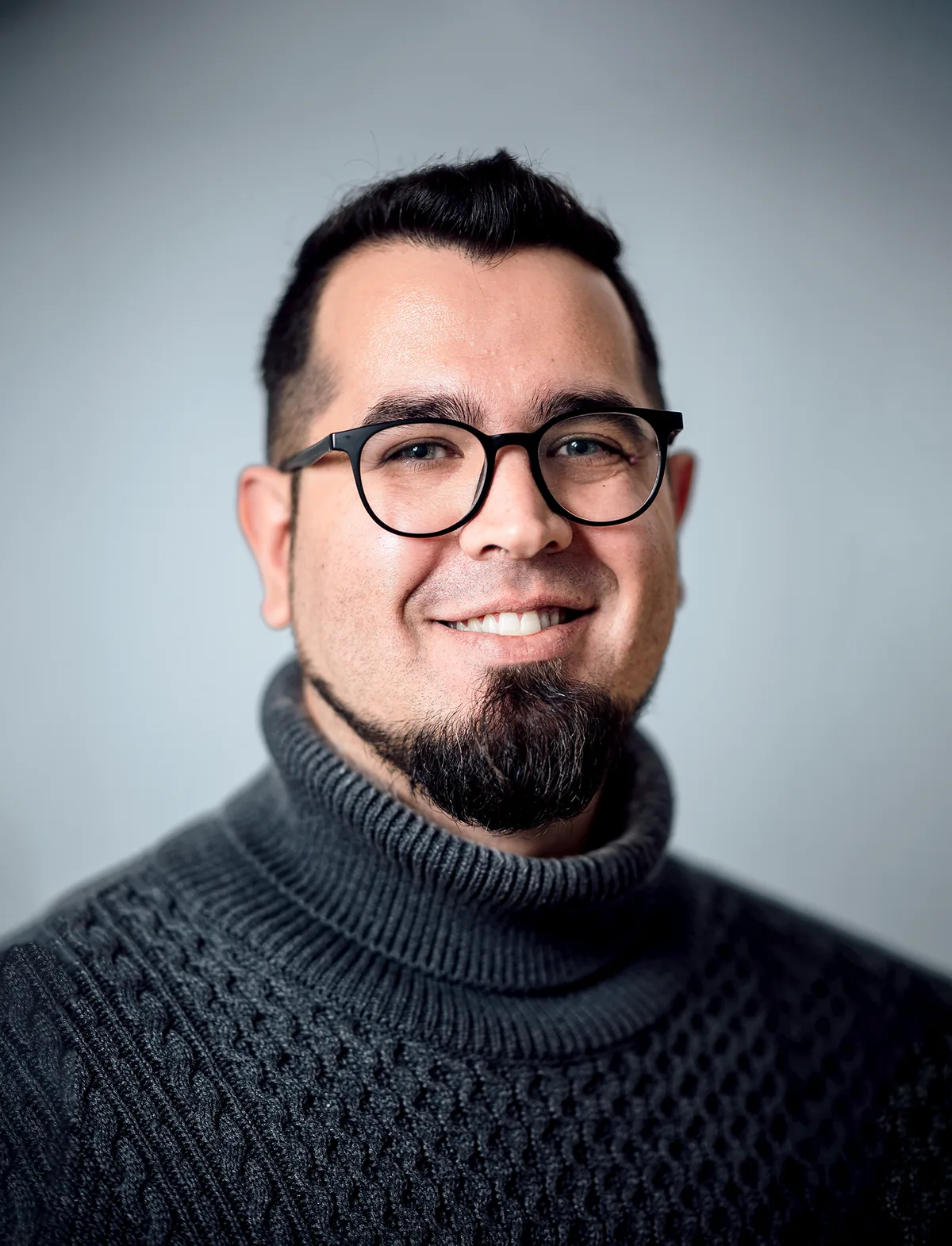
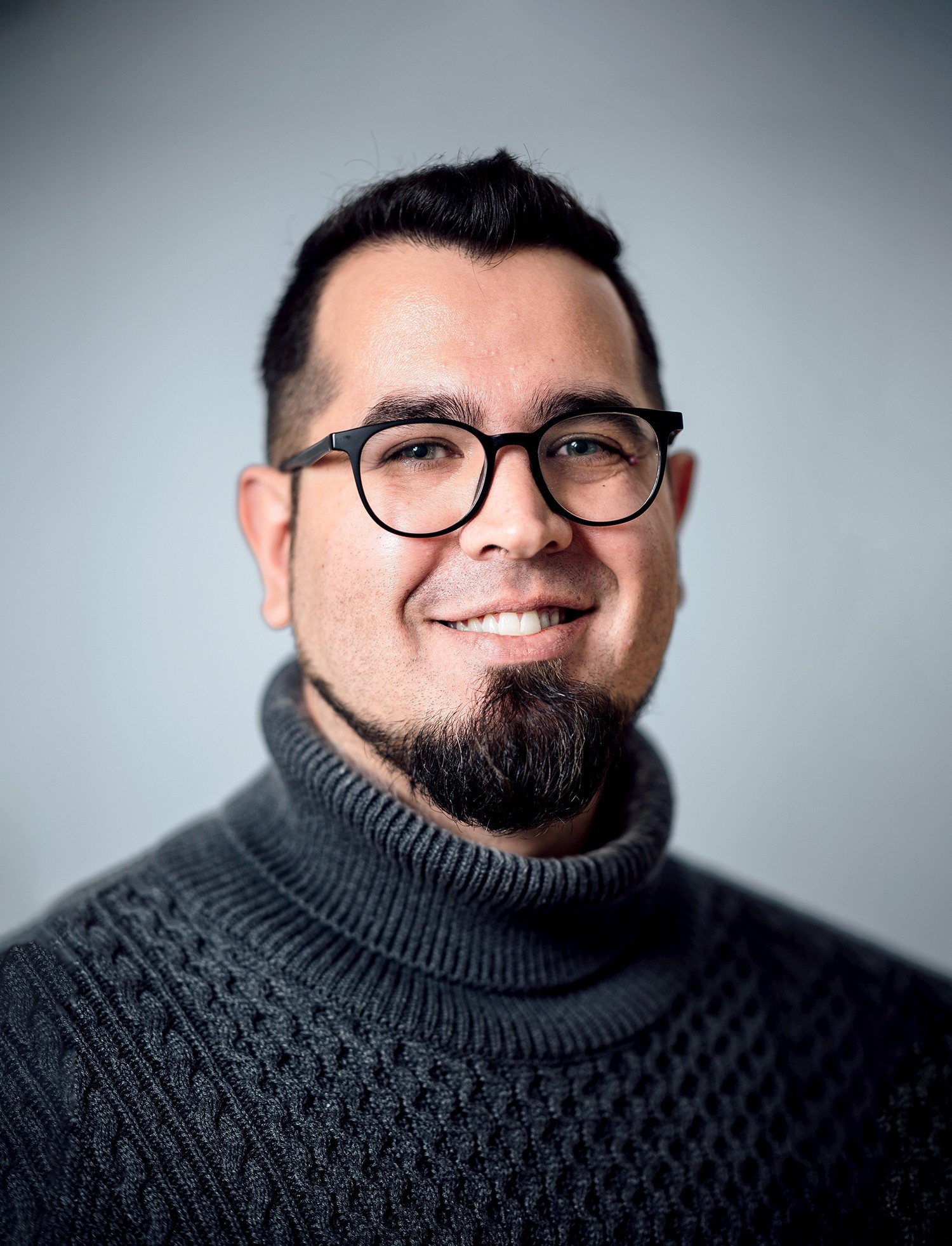
Hello, I’m Silas Klein.
(Ancient) Religion\s, Media & Images
I study how images mediate religion: from the seals of the ancient Levant to the tools we use to read them. I read images with the eye of someone who spent two decades making them.
- Now
- Professor & Dean, Graduate Program in Religious Studies, Faculdade Unida de Vitória · Research Associate, University of Bern
- Field
- Iconography, biblical studies and the history of religion in the ancient southern Levant
01about
Silas Klein studies how images and artifacts mediated religion in the ancient southern Levant. Before academia, he spent two decades as an art director.
He is Professor of Old Testament and Religious Studies and Dean of the Graduate Program in Religious Studies at Faculdade Unida de Vitória, Brazil, and Research Associate at the University of Bern. His doctoral dissertation received Brazil’s Grand CAPES Thesis Award Bertha Koiffmann Becker, and in 2024 he completed his habilitation at the University of Bern.
02now
Current projects
- Research platform2024–currentObservatório de Universos Bíblicos The group I founded and co-lead at FUV’s graduate program: it brings together research on the inscriptions, images, objects, literatures and rites of the biblical worlds.
- Research project2025–currentBorderline Divine Manifestations Where human, animal and divine blur: hybrid beings and image-text media in the southern Levant.
- Educational project2024–currentInternational Summer School: Iconography of the Ancient World An itinerant school of visual methods for MA and PhD students and early-career researchers: Wuppertal, Vitória and, in 2027, Prague.
03research
How images mediate religions
My research asks how images and artifacts mediated and materialized religion in the ancient southern Levant, the world in which biblical texts were written, and how the tools of scholarship shape what we see in them.
Borderline Divine Manifestations in the Biblical World
CoordinatorFUV (Brazil)
I investigate borderline forms of representation of the divine in the southern Levant between the 8th century BCE and the 4th century CE. The hypothesis is that religious thought in this period worked according to a relational ontology, in which the boundaries between human and non-human were porous. One module studies beings in which humans, animals and deities intertwine or hybridize (Mischwesen and Zwischenwesen); the other, hybrid media that combine inscription and image, such as stamp seals and graffiti. The project brings together iconographic, epigraphic and exegetical analysis from an intersemiotic and decolonial perspective.
Read moreInternational Summer School: Iconography of the Ancient World
Co-creator and director with Thomas WagnerBUW & FUV
It teaches how to read ancient images as sources: methods of visual interpretation, ancient Near Eastern iconography and interartistic approaches to the Bible, with hands-on work on artifacts. In the tradition of the Fribourg School, visual culture is read alongside ancient literature, epigraphy and archaeology. Each edition has 20 contact hours (2 ECTS), taught in English. The 2024 theme was Iconography of the Ancient Southern Levant; since 2025, Iconography of the Ancient World.
Read moreAwards & distinctions
- Habilitation (venia legendi) in Protestant Theology, University of Bern, 2024
- Grand CAPES Thesis Award Bertha Koiffmann Becker, best dissertation in the Humanities, 2020
- CAPES Thesis Award, Religious Studies and Theology, 2020
- Summa cum laude, PhD in Religious Studies, UMESP, 2019
- Summa cum laude, MA in Religious Studies, UMESP, 2015
Other projects (7)
- 2026–currentEpOD: Epistemology of the Divine
Associate researcher, sub-project 3 “Daily Visible: Towards an Epistemology of the Divine Mediated through (the) Images” (lead: PD Dr. Thomas Wagner)BUW (Germany)
The Research Unit explores how knowledge of the divine was constructed, remembered and communicated in ancient Israel/Palestine as monotheism took shape. Sub-project 3 studies stamp and cylinder seals as the first mass media: external manifestations of religious thought whose circulation created spheres of influence and knowledge. - 2024–2025Mediators of Biblical Religions
Principal investigatorFUV (Brazil)
Material, literary and socio-epistemic mediators of religion in the biblical worlds. - 2024Paleographic Networks
Research collaborator (with Eythan Levy, SNSF)UniBE (Switzerland)
Towards automated paleographic dating of Old Hebrew seals; open database on Zenodo. - 2020–2024Assessing ‘Iconographic Exegesis’
Postdoctoral researcher, module leaderUZH (Switzerland)
Within the project “Stamp Seals from the Southern Levant”, this module assessed the history, theory and method of “iconographic exegesis”, the interartistic approach that uses visual remains of ancient Palestine/Israel to illuminate biblical terms, texts and concepts. - 2021–2022Liminal Devices
Principal investigatorUZH (Switzerland)
Informed by media theory and media archaeology, the project addressed the artifacts through which religion was practiced and conceived in the Iron Age southern Levant: objects that enabled religion, embodied “religious power” and mediated communication with non-empirical beings and forces. - 2015–2019Magical-Mythical Networks at the Dawn of Israel
Doctoral researchUMESP (Brazil) & UZH (Switzerland)
A religious micro-history of the Benjamin plateau in Iron Age I–IIA (c. 1125–875 BCE), the probable place of origin of “ancient Israel”, drawing on material, visual and textual evidence. - 2013–2015The Torah’s Materiality and the Invention of Post-Exilic Aniconism
MA researchUMESP (Brazil)
The Torah as a cultic object in the Persian and Hellenistic periods.
04publications
Books & selected writing
Books
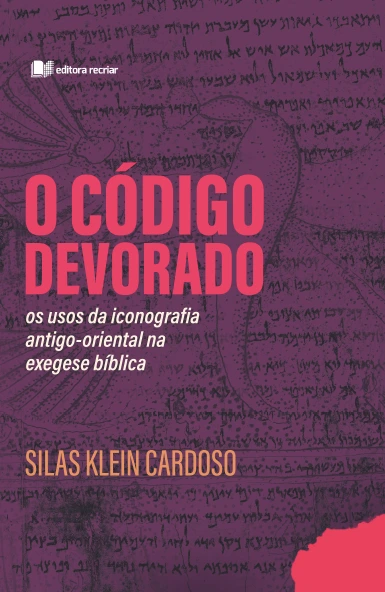 O código devorado: os usos da iconografia antigo-oriental na exegese bíblicaSão Paulo: Recriar, 2025 · open accessPublisherPDF
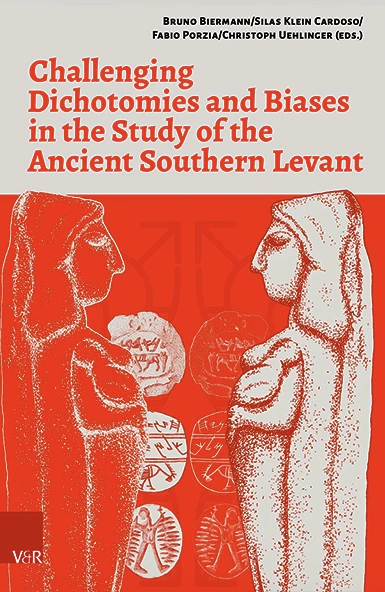 Challenging Dichotomies and Biases in the Study of the Ancient Southern LevantCo-edited with B. Biermann, F. Porzia & C. Uehlinger · Göttingen: Vandenhoeck & Ruprecht, 2024 · open accessPublisherPDF
Selected articles & chapters
- Currents in Biblical Research 21(2), 2023The Genesis of Iconographic ExegesisDOIPDF
- Die Welt des Orients, Supplementary Issue, 2024Beyond the Image-Text Divide: In Search of a Multidimensional Approach to Compare Visual Artifacts and Biblical TextsDOI
- Festschrift für Silvia Schroer, Orbis Biblicus et Orientalis (Peeters), 2023Liminal DevicesPDF
- Near Eastern Archaeology 86(4), 2023A Tale of Twelve Thousand Cards: Stamp Seals’ Scholarship History with Social-Material LensesDOIPDF
- Gender and Iconography in Antiquity (Vandenhoeck & Ruprecht), 2026(En)gendering Lines: Stamp Seals’ Intersemiotic Relations and Some Socio-Historical ImplicationsDOIPDF
05teaching
In classrooms & in public
I have taught undergraduate, master’s and doctoral students in Brazil and abroad (Switzerland and Germany). My courses cover Old Testament exegesis, the archaeology and iconography of the Levant, and the history of religions. In them, we read texts alongside artifacts and work with digital databases.
- Interviews & talks Interviews, round tables and talks online on images in ancient Israel, archaeology and the Bible, and the history of monotheism.
- universos.biblicos Theological entries and research notes from the Observatório de Universos Bíblicos on Instagram.
- Levantine Seals Website and social media channels that bring the study of stamp seals to a wider audience.
06initiatives
Spaces built with others
International Summer School: Iconography of the Ancient WorldAn annual school in visual methods for master’s and doctoral students and early-career researchers.
Each year the school moves between European and Latin American hosts, with an international Scientific Board and 2 ECTS (20 contact hours) per edition. Rooted in the visual studies tradition of the Fribourg School, it teaches students to read ancient images alongside texts, inscriptions and archaeological evidence, with hands-on work on artifacts.
Observatório de Universos BíblicosThe research group I founded at FUV to study the worlds that produced the Bible.
I founded the Observatório in late 2024, within the Graduate Program in Religious Studies at Faculdade Unida de Vitória; since late 2025 I have co-led it with Prof. José Adriano Filho. Long bound to Christian exegesis and theology, the study of the Bible now draws on the methods and evidence of many other fields, but still lacks the concepts to make sense of that mix. So we bring together research on the inscriptions, images, objects, literatures and rites of the biblical worlds, with questions from anthropology, archaeology, hermeneutics, philosophy, and the history and literature of religions.
Graduate Program in Religious Studies, FUVDean of the professional master’s and doctoral program at Faculdade Unida de Vitória, Brazil, since 2025.
The Professional Graduate Program in Religious Studies trains people who already work outside the university, above all schoolteachers, and turns each student’s professional practice into applied research. As Dean, I oversee the curriculum and the program’s assessment and, with FUV, its research partnerships in Brazil and abroad. Each semester I organize a faculty seminar; the most recent addressed digital challenges in graduate education (2025) and Religious Studies as a national and international field of research (2026).
Events I organizeConferences, symposia and workshops that bring together scholars from Europe and Latin America.
I organize meetings that bring together people who study the images, texts and objects of the biblical worlds, often linking European and Latin American scholarship. In 2026: the XXXIII Colloquium Biblicum, on image and likeness (Charles University, Prague), the XI International Congress of Abib, on body and embodiment (PUC-Rio), and the international symposium “The Zodiac and Religious Conceptions of Time” (Observatório de Universos Bíblicos, Vitória). Before that, the workshop “Beyond the Biblical World Paradigm” (Zurich, 2022) and workshops on visual methods for ancient minor arts (ICAANE, Copenhagen, 2023), apocrypha and the monstrous (Behemot network, online, 2023), paleographic networks (Bern, 2024) and the CSSL database (Zurich, 2024).
Academic serviceRoles in learned societies, journal editing and peer review in Brazil and Europe.
I am Vice-President of the Brazilian Association for Biblical Research (Abib; elected in 2024, in office since January 2025), a member of the committee of the European Association of Biblical Studies (EABS, 2025–2028), after serving on its audit board (2022–2025), and rapporteur of the Forum of Professional Programs in Theology and Religious Studies (FOPROTEC, since 2026); I am also a member of the Society of Biblical Literature (SBL) and the Swiss Society for the Study of Religions (SGR-SSSR). For journals, I served on the Brazilian coordinating team of RIBLA from 2016 to 2018, and I review for journals such as Tel Aviv, Estudos Bíblicos, Horizonte, Numen and Revista Eclesiástica Brasileira.
07design
Art direction
Before reading ancient images, I made new ones as an art director for agencies, studios and global brands. The same eye now works for research: identities, layouts and visual systems for scholarly projects.
27 Million2FitA1.BrasilAbibAG2 Publicis ModemAgência VittBlackBerryBMWBradescoCaixaCEAPCoca-ColaConnectComD3! EstúdioDoubleleftEditora AbrilFocoGeneral MotorsGolGroupe SEBHabib’sInstituto Carlyle BrazilModa LimpaNaturaNestléNetflixOral-BPirelliPublicis Red LionRio 2016SaintsSamsungShimanoSolidumSony Entertainment TelevisionSt. AndrewsVivoWarner Bros.Warner ChannelWebjet






Design for research
- Stamp Seals from the Southern Levant Visual identity and consulting for the digital corpus of the SNSF Sinergia project (Zurich, Bern, Tel Aviv), 2020–2024.
- Paleographic Networks Photography, scientific illustration and information design for the SNSF SPARK project (Bern), 2024.
- Observatório de Universos Bíblicos Identity and routine for FUV’s research group: brand, website, lectures, posts and events, since 2025.
- EpOD: Epistemology of the Divine Visual identity for the DFG and FWF research group (Bonn, Leipzig, Wuppertal, Vienna), 2026.